Bachelor of Engineering Technology
GOVERNMENT COLLEGE OF TECHNOLOGY, LARKANO
- Bachelor of Civil Engineering Technology
- Bachelor of Electrical Engineering Technology
- Bachelor of Mechanical Engineering Technology
Program Introduction
Department of Civil Engineering
The Department of Civil Engineering Technology offers four (04) year Bachelor of Engineering Technology program. The program is primarily designed in such a way that it deals with essential advances in engineering technology education according to cuttingedge requirements of the field.
Program Vision:
To be recognized as a leading program in Civil Engineering Technology that produce skilled, innovative, and socially responsible technologists to meet the challenges of modern infrastructure development.
Program Mission:
The mission of the B.E.Tech Civil Engineering Technology program is to produce skilled and responsible engineering technologists capable of applying modern engineering practices for sustainable infrastructure development and to provide opportunity to DAE pass student to upgrade their knowledge and skills.
Program Educational Objectives (PEO’s)
BSc CIVIL ENGINEERING
PEO-01: Acquiring fundamental knowledge of core civil engineering technology disciplines and their applications in Society.
PEO-02: Implementing role as civil engineering technologist in the sustainable development of society at the regional, national and global levels.
PEO-03: To have a thorough grip on best practices of civil engineering technology to bridge the gap between industry and academia.
Program Learning Outcomes (PLOs)
BSc CIVIL ENGINEERING
(i) Engineering Technology Knowledge: An ability to apply knowledge of mathematics, natural science, engineering technology fundamentals, and engineering technology specialization, to defined and applied engineering technology procedures, processes, systems or methodologies.
(ii) Problem Analysis: An ability to identify, formulate, research literature, and analyze Broadly Defined Engineering Technology Problems to reach substantiated conclusions, using analytical tools appropriate to the discipline or area of specialization.
(iii) Design and Development of Solutions: An ability to design solutions for Broadly Defined Engineering Technology Problems that help design of systems, components or processes that meet specified needs, while being cognizant of public health and safety issues, and conscious of cultural, societal, and environmental considerations.
(iv) Investigation: An ability to investigate Broadly Defined Engineering Technology Problems by locating, searching, and selecting relevant data from codes, data bases and literature, and finally, by designing and conducting experiments to provide valid conclusions.
(v) Tool Usage: An ability to select and apply appropriate techniques, resources, modern technology, and IT tools, including prediction and modelling, to Broadly Defined Engineering Technology Problems.
(vi) The Engineering Technologist and Society: An ability to understand the societal, health, safety, legal and cultural issues, and the consequent responsibilities relevant to engineering technology practice and solutions to Broadly Defined Engineering Technology problems.
(vii) Environment and Sustainability: An ability to understand and evaluate the sustainability and impact of engineering technology work in the solution of Broadly Defined Engineering Technology Problems in societal and environmental contexts.
(viii) Ethics: Understand and commit to professional ethics and responsibilities and norms of engineering technology practice.
(ix) Individual and Teamwork: An ability to function effectively as an individual, and as a member or leader in diverse teams.
(x) Communication Skills: An ability to communicate effectively on Broadly Defined Engineering Technology activities with engineering technologist community, and with society at large, by comprehending and writing effective reports and design documents, make effective presentations, and give and receive clear instructions.
(xi) Project Management: An ability to demonstrate knowledge and understanding of engineering technology management principles and apply these to one’s own work, as a member or leader in a team, and to manage projects in multidisciplinary environments.
(xii) Lifelong Learning: An ability to recognize the need for and engage in independent and life- long learning in engineering technologies.
SEATS ALLOCATION
| Sr. No. |
Category | Percentage % of Total Seats |
Total No. of Seats |
|---|---|---|---|
| 01 | Open Merit (Larkano / Sukkur Divisions) |
60% of 40 Seats | 24 Seats |
| 02 | All Sindh Basis (Other Districts of Sindh except Larkano / Sukkur Divisions) |
20% of 40 Seats | 08 Seats |
| 03 | Reserved Seats | ||
| 3.1 | Real Sons/Daughters/Brothers/Sisters of STEVTA Employees. (Civil/Public Servants/Retired/Deceased) |
5% of 40 Seats | 02 Seats |
| 3.2 | In-service Staff Members of Technical Education | 5% of 40 Seats | 02 Seats |
| 3.3 | Reciprocal Basis | 2.5% of 40 Seats | 01 Seat |
| 3.4 | Sons/Daughters of the Defence/Armed Forces Personnel | 2.5% of 40 Seats | 01 Seat |
| 3.5 | Extracurricular Activities | 2.5% of 40 Seats | 01 Seat |
| 3.6 | Transgender (She-male) / Disable Persons | 2.5% of 40 Seats | 01 Seat |
| Regular Seats 40 | 40 Seats | ||
| Self-finance Seats 05 | Grand Total | 45 Seats | |
ELIGIBILITY CRITERIA
For admission to the Bachelor of Engineering Technology Programme, the candidates must fulfil one of the following requirements with a minimum of 50% Marks:
i. Three years Diploma of Associate Engineer in the relevant field from Sindh Board of Technical Education, Karachi / other Technical Boards
ii. H.S.C. (Pre-Engineering) or equivalent from Boards of Intermediate Education, and the candidate has to appear in Pre–Admission Test conducted by the University / College.
▪ FEES STRUCTURE
| S # | Head of Account | Semester wise Schedule | |||||||
|---|---|---|---|---|---|---|---|---|---|
| 1st | 2nd | 3rd | 4th | 5th | 6th | 7th | 8th | ||
| 01 | Admission fee | 500 | ----- | ----- | ----- | ----- | ----- | ----- | ----- |
| 02 | Tuition fee | 500 | 500 | 500 | 500 | 500 | 500 | 500 | 500 |
| 03 | Training Charges | 18,000 | 18,000 | 18,000 | 18,000 | 18,000 | 18,000 | 18,000 | 18,000 |
| 04 | Security Deposit (refundable) | 1,000 | ----- | ----- | ----- | ----- | ----- | ----- | ----- |
| 05 | Visit/Industrial Tour fee | 1,500 | 1,500 | 1,500 | 1,500 | 1,500 | 1,500 | 1,500 | 1,500 |
| 06 | Library fee | 1,000 | 1,000 | 1,000 | 1,000 | 1,000 | 1,000 | 1,000 | 1,000 |
| 07 | Gymkhana / Sports fee | 500 | 500 | 500 | 500 | 500 | 500 | 500 | 500 |
| 08 | First Aid fee | 500 | 500 | 500 | 500 | 500 | 500 | 500 | 500 |
| 09 | Courier service Charges | 500 | 500 | 500 | 500 | 500 | 500 | 500 | 500 |
| 24,000 | 22,500 | 22,500 | 22,500 | 22,500 | 22,500 | 22,500 | 22,500 | ||
Note: Transport fee Rs. 1,000/- per semester will be applicable for students availing transport facility.
2. Fee for Self Help Basis Scheme
(Rs. 20,000/= per semester + Regular college fee as mentioned above).
3. Registration fee for summer classes (Applicable to Failure Students)
| Registration fee per subject | Type | Amount |
|---|---|---|
| Registration fee per subject | Theory 03 Credit Hours | Rs. 3,000/- |
| Theory 01 Credit Hour | Rs. 1,500/- | |
| Practical | Rs. 1,800/- |
Facilities in Program
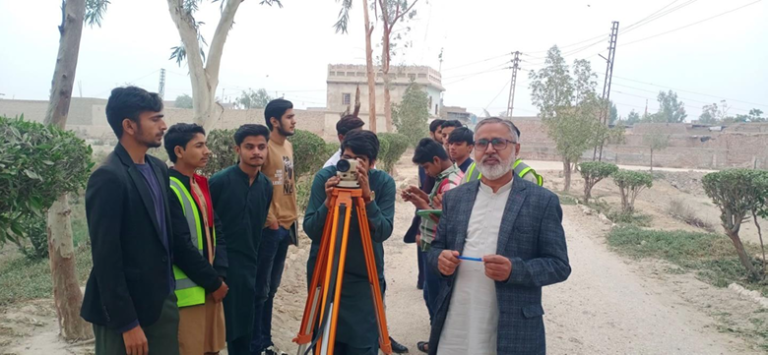
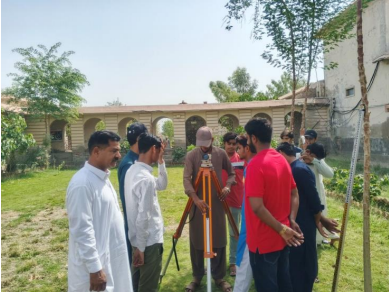
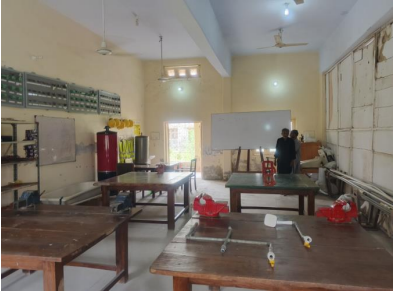
CIVIL WORKSHOPS
The College has sufficient number of spacious workshops and laboratories adequately equipped with necessary machinery and instruments to provide an excellent opportunity for training of students according to the detailed curriculum in each engineering technology.
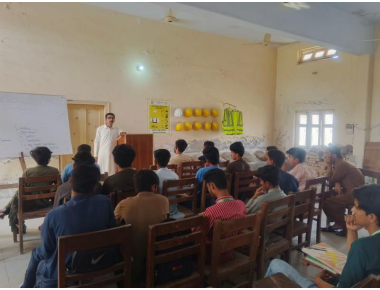
Interactive Classroom
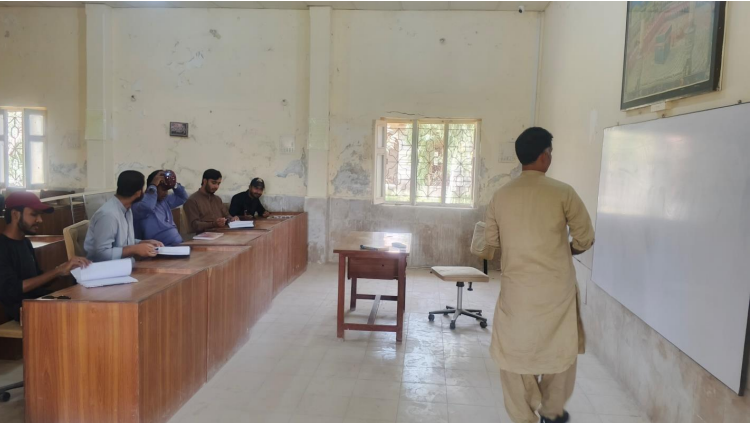
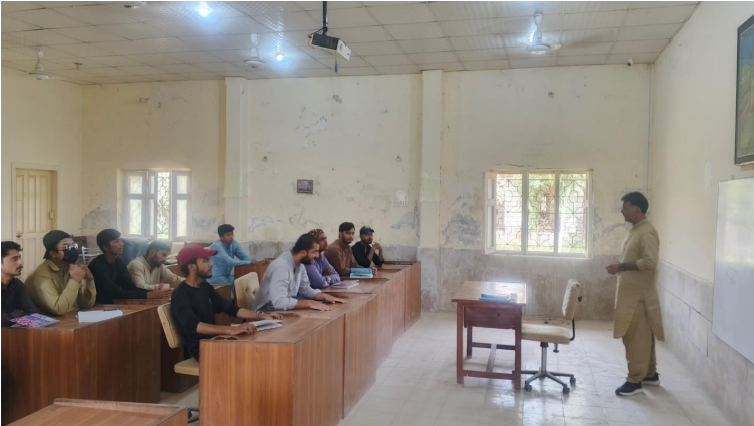
An interactive classroom furnished with state-of the-art interactive board and audio video systems have been established to facilitate students
BSc. Electrical Program Introduction
BSc Electrical Program
The Department of Electrical Engineering Technology offers four (04) year Bachelor of Engineering Technology program. The program is primarily designed in such a way that it deals with essential advances in engineering technology education according to cuttingedge requirements of the field.
Program Vision:
To be recognized globally as a center of excellence, this offers high quality education, technological knowledge and outreach activities with innovation and creativity in the field Electrical Engineering Technology.
Program Mission:
The mission of Department of Electrical Engineering Technology is to provide high quality of education to produce skilled, dynamic, creative and ethical professionals to take active part in development of society.
Program Educational Objectives (PEO’s)
EET PEO’S
PEO-01: Apply the concepts of basic sciences as well as technical knowledge and skills to effectively solve real life problems in the broad field of electrical engineering technology.
PEO-02: Comprehend, adapt to and contribute to the rapid and continuous changes of technology for the sake of professional promotion, occupational mobility and adhesion to leadership in their chosen technical fields.
PEO-03: To initiate entrepreneurship and contribute in corporate enterprises with technical hands-on experience.
SEATS ALLOCATION
| 11. CATEGORY WISE ALLOCATION OF SEATS | ||||
| The Percentage / Quota wise distribution of seats in each category is as under. | ||||
| Sr. No. | Category | Percentage % of Total Seats |
Distribution of Seats on DAE & HSC Basis |
Total Number of Seats |
|---|---|---|---|---|
| 01 |
Open Merit (Boys & Girls) (Larkano Region) |
60% of 40 Seats (24 Seats) |
For DAE ------ 14 For HSC ------ 10 |
24 Seats |
| 02 |
All Sindh Basis (Other Districts of Sindh). (a) Rural Area 60% of 08 seats –– 05 (b) Urban Area 40% of 08 seats –– 03 |
20% of 40 Seats (08 Seats) |
(a) For DAE ------ 03 For HSC ------ 02 (b) For DAE ------ 02 For HSC ------ 01 |
08 Seats |
| 03 |
Real Sons/Daughters/ Sisters/Brothers of the STEVTA Employees. (Serving/Retired) (C+P) |
5% (02 Seats) | For DAE/HSC -- 02 | 02 Seats |
| 04 |
Teaching Staff of STEVTA (Civil & Public Servant) |
5% (02 Seats) | For DAE/HSC -- 02 | 02 Seats |
| 05 | Reciprocal Basis | 2.5% (01 Seat) | For DAE/HSC -- 01 | 01 Seat |
| 06 |
Sons/Daughters of the Defense / Armed forces Personnel. |
2.5% (01 Seat) | For DAE/HSC -- 01 | 01 Seat |
| 07 | Co-Curricular Activities | 2.5% (01 Seat) | For DAE/HSC -- 01 | 01 Seat |
| 08 |
Trans-Gender (She-Male) / Disable Persons |
2.5% (01 Seat) | For DAE/HSC -- 01 | 01 Seat |
| Total | 100% | 40 Seats + 05 Seats on Self Finance = 45 Seats | ||
ELIGIBILITY CRITERIA
For admission to the Bachelor of Engineering Technology Programme, the candidates must fulfil one of the following requirements with a minimum of 50% Marks:
- Three years Diploma of Associate Engineer in the relevant field from Sindh Board of Technical Education, Karachi / other Technical Boards
- H.S.C. (Pre-Engineering) or equivalent from the Boards of Intermediate Education, and the candidate has to appear in Pre–Admission Test Conducted by the Univer
FEES STRUCTURE
| S # | Head of Account | 1st | 2nd | 3rd | 4th | 5th | 6th | 7th | 8th |
|---|---|---|---|---|---|---|---|---|---|
| 01 | Admission Fee | 500 | ------ | ||||||
| 02 | Tuition Fee | 500 | 500 | 500 | 500 | 500 | 500 | 500 | 500 |
| 03 | Training Charges | 18,000 each semester | |||||||
| 04 | Security Deposit (Refundable) | 10,000 | ------ | ||||||
| 05 | Visit / Industrial Tour Fee | 1,500 each semester | |||||||
| 06 | Library Fee | 1,000 each semester | |||||||
| 07 | Gymkhana / Sports Fee | 500 each semester | |||||||
| 08 | First Aid Fee | 500 each semester | |||||||
| 09 | Courier Service Charges | 500 each semester | |||||||
| Total | 24,000 | 22,500 | 22,500 | 22,500 | 22,500 | 22,500 | 22,500 | 22,500 | |
Note: Transport fee Rs. 1,000/- per semester will be applicable for students availing transport facility.
2. Fee for Self Help Basis Scheme
Rs. 20,000/- per semester + Regular college fee as mentioned above.
3. Registration Fee for Summer Classes (Applicable to Failure Students)
| Theory 03 Credit Hours | Rs. 3,000/- |
| Theory 01 Credit Hour | Rs. 1,500/- |
| Practical | Rs. 1,800/- |
Diploma of Associate Engineering (DAE)
- DAE in Civil Technology
- DAE in Electrical Technology
- DAE in Mechanical Technology
CCTE Sino-Pak Dual Diploma (Scholarship for Study in China)
- Dual Diploma in Land and Resources Survey and Management